Activewear Guide · Leggings
A guide for women who move, whatever that looks like for you, in leggings built for it.
If you've ever caught your own reflection mid squat and thought "please tell me these aren't see through," you already know most leggings don't do what the tag promises. Doesn't matter whether you're headed into a HIIT class, a reformer Pilates studio, or just the school run, the questions are the same: will they stay opaque, will the waistband still be where you left it an hour from now, and will you actually want to wear them again on Tuesday. So let's answer all of it. Here's what makes a pair of leggings good.
The short version
✓Fabric weight of 280 GSM or more for real squat proof coverage
✓Four way stretch and a flatlock seam so nothing chafes or digs in
✓A waistband that feels snug straight out of the packet, no breaking in required
✓A fabric that feels good on skin all day, not just for the workout itself
Why do most leggings let you down?
I come from an architecture background, not fashion, so I look at leggings the way I'd look at a badly built structure. Something's always been cut to save cost. Usually it's the fabric weight, sometimes it's the spandex percentage, and often it's a waistband that was designed to look good folded on a shelf rather than survive a real Pilates class. Thin fabric goes see through the second you bend over. That's not bad luck, it's a brand choosing a lighter, cheaper knit because it's cheaper to produce and ship. A waistband with weak elastic recovery rolls down in the first ten minutes, no matter how "high waisted" the listing calls it.
None of this comes down to brand name. It comes down to what's actually in the fabric and how the pattern is cut.
What should you look for in leggings?
Skip the buzzwords on the hang tag and check these instead.
✓ Fabric weight, or GSM. This is grams per square metre, basically how dense the knit is. Anything under 220 GSM will feel light and airy but will let you down the moment you stretch. 280 GSM and up is what actually holds opacity through a squat or a deep lunge.
✓ Four way stretch. Fabric that stretches in both directions moves with your body instead of fighting it. It's the difference between a comfortable lunge and one that feels like your leggings are trying to hold you back.
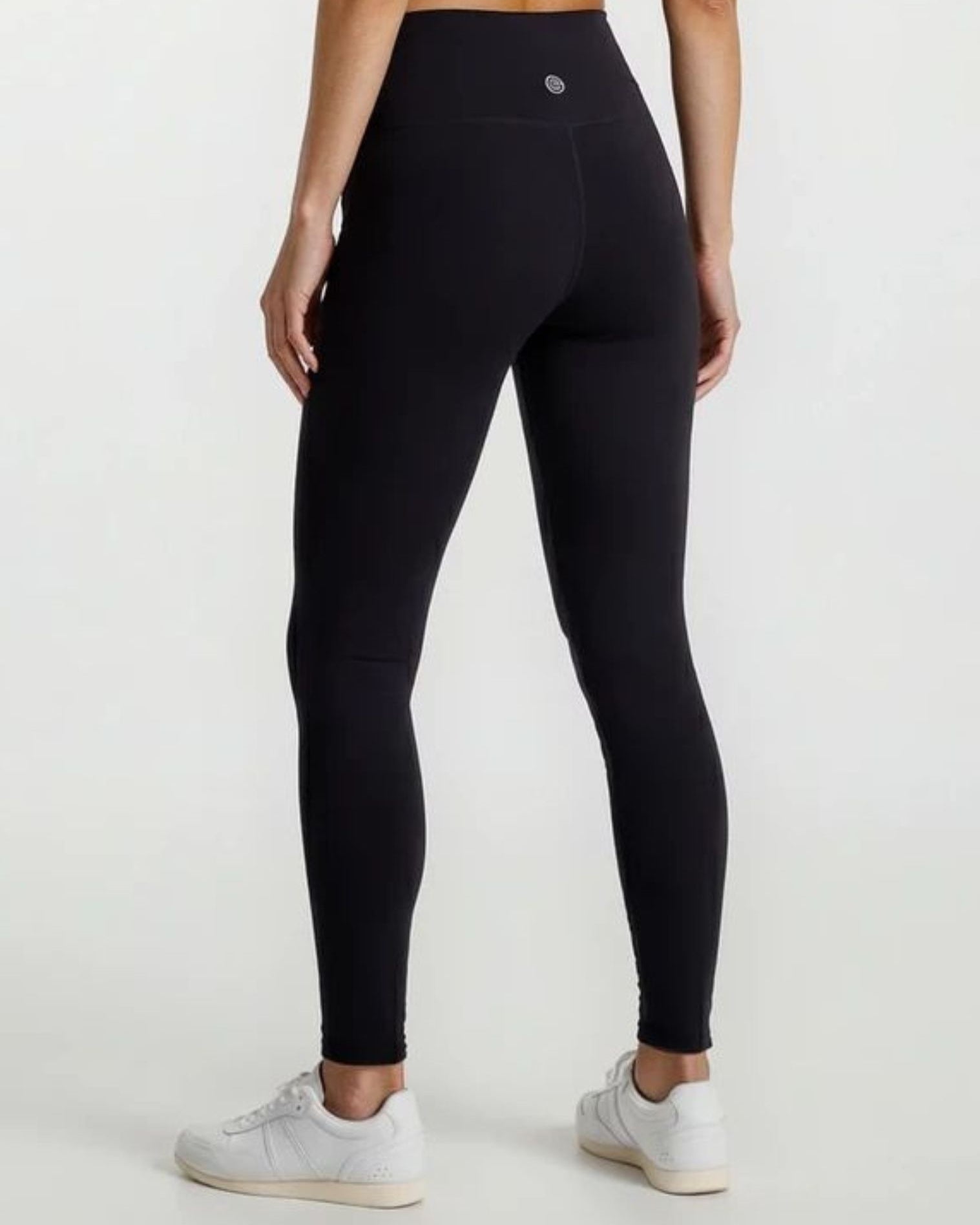
✓ A proper waistband. Wide and reinforced, not a thin fold of the same body fabric. It should feel snug the second you pull it out of the packet. If it feels loose on day one, it'll be sitting around your hips by week two.
✓ The gusset. That panel sewn into the crotch seam. A flat, well placed gusset means no digging in when you sit, squat, or move into a wide legged stretch.
✓ Flatlock seams. Stitched flat rather than overlapped, so they don't rub or chafe if you're wearing them for hours.
Our own leggings range is engineered around these five, in a heavier bamboo-cotton knit with a proper spandex ratio. It's the unglamorous engineering nobody posts about on Instagram, but it's exactly what decides whether you reach for a pair on a random Tuesday.
What length should you buy?
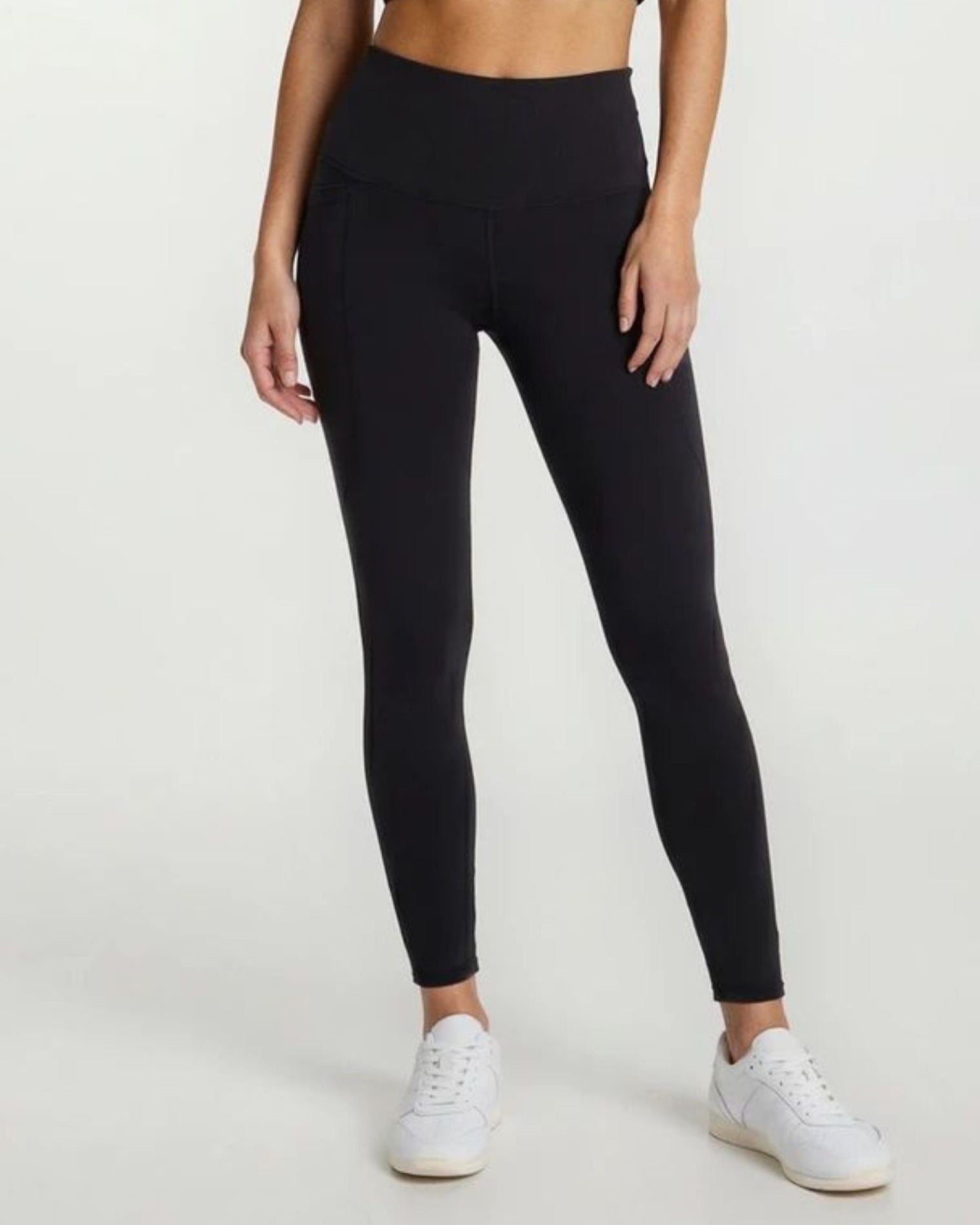
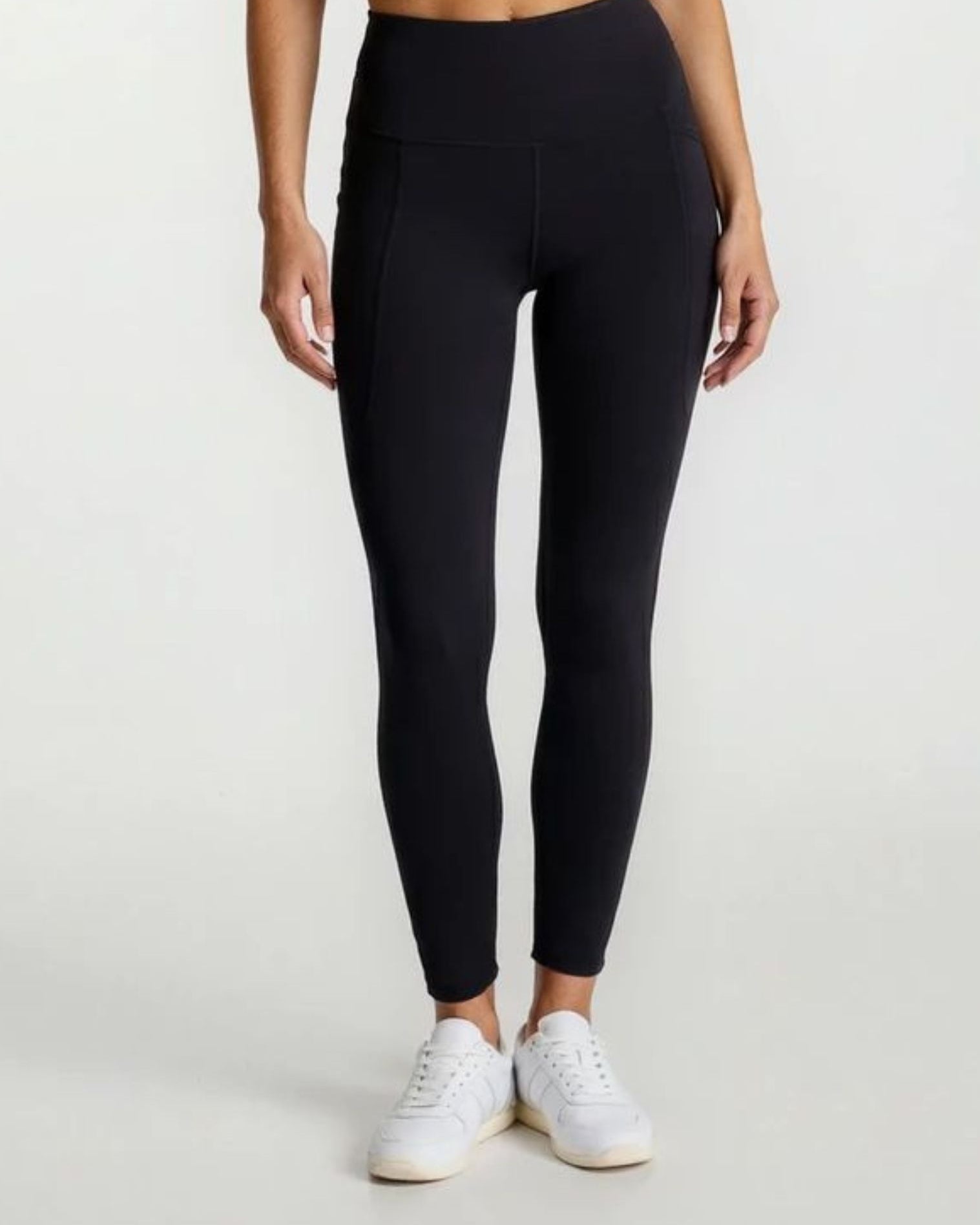
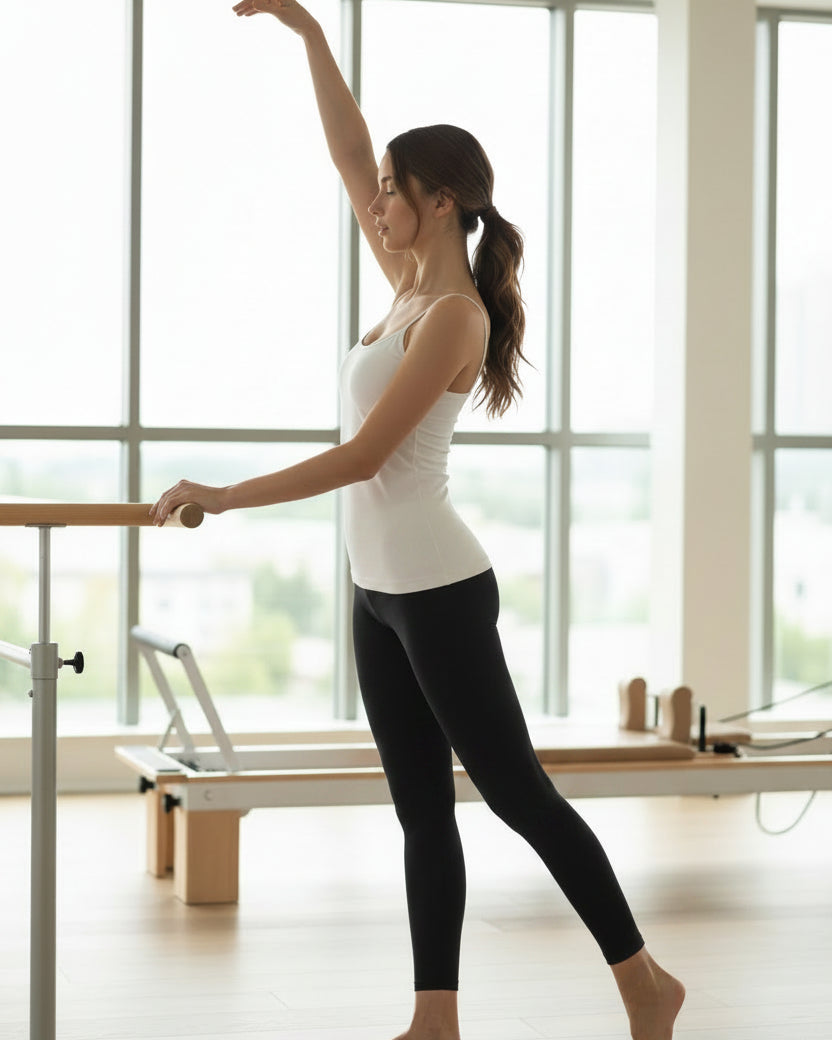
There's no single right answer here. It really depends what you're doing and, frankly, what the weather's doing too. Full length is the most versatile option and the safest first buy, good for Pilates, weights, walking, errands, all of it. Ankle length (fits as 7/8 length for some), sitting just above the ankle bone, has become the go to for studio classes and Reformer Pilates because it shows a bit of ankle without bunching up around your shoe. This is the most trending currently with celebrities pushing the style. Crop suits hot weather, HIIT, or anything with a lot of floor work where you don't want fabric catching under your knee. If you want serious range of motion for hot yoga or high intensity training, bike shorts are the better call.
One thing worth knowing before you buy: "ankle length" is measured on an average height, so where it actually sits depends on you. If you're on the taller side, ours will likely sit a little higher, closer to what you'd call a 7/8, rather than right at the anklebone. Neither is wrong, it's just worth knowing which one you're getting before it arrives.
We hear this a lot from women who'd been living in the crop for months, they wanted a bit more coverage for a studio-to-street day without giving up the range of motion crop gives you. That's the exact gap the Ankle length was built to fill.

High waist, cross waist, or fold down? Which waistband stays up?
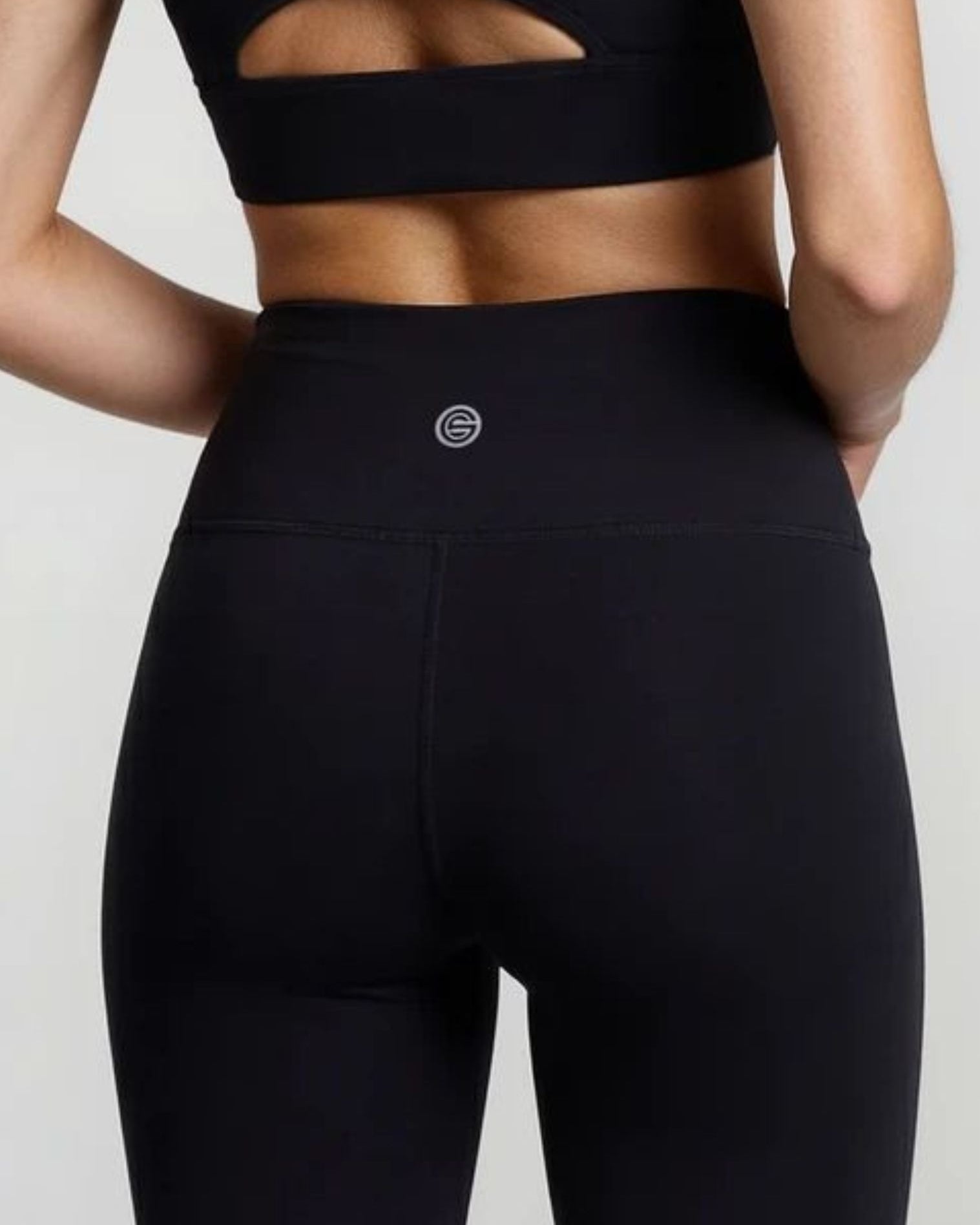
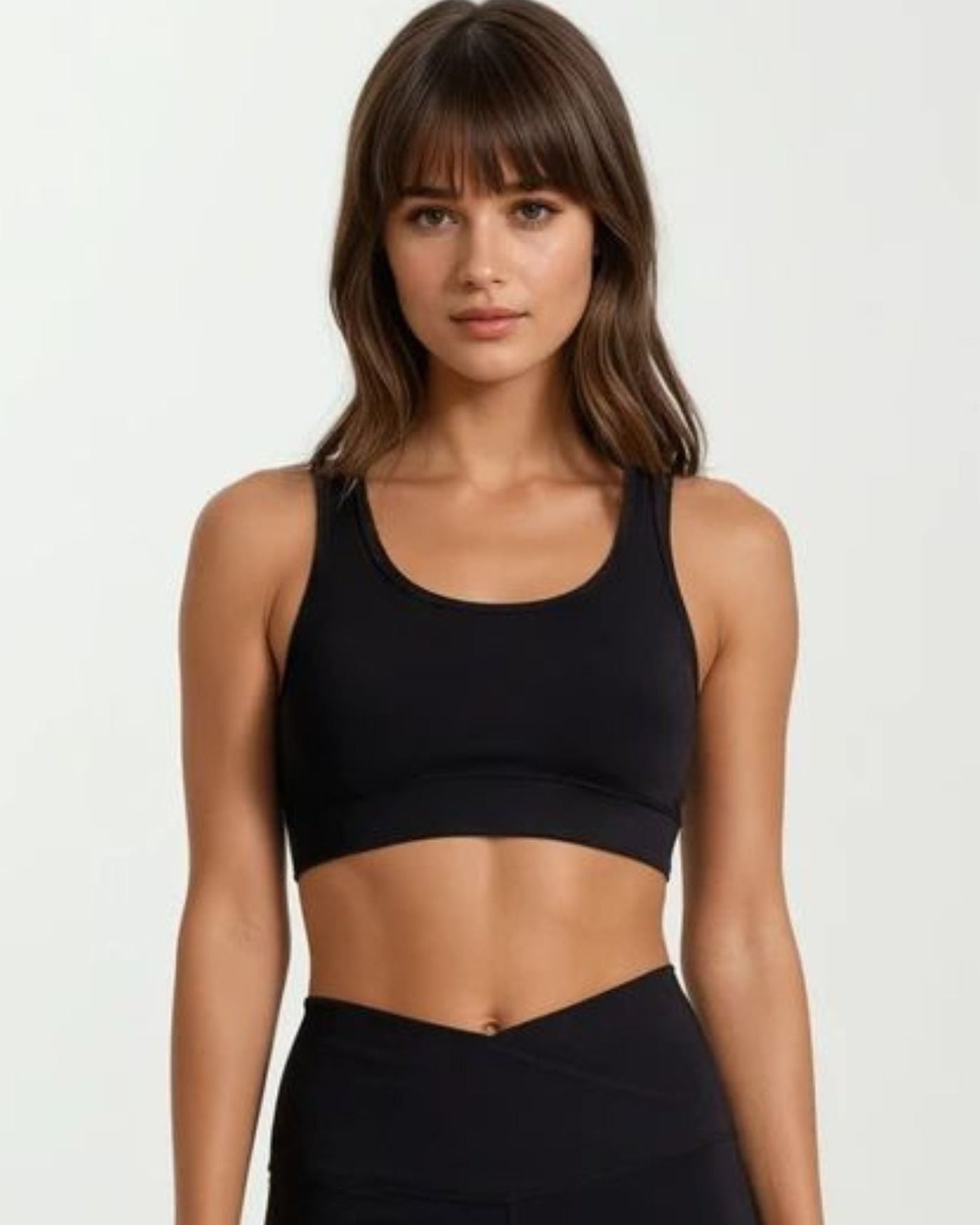
Standard high waist is the safest bet. It sits at or just above the belly button and, done properly, covers you without digging in. Cross waist (sometimes called a V cross) uses two panels that cross and cinch at the front. That crossover point works like a second anchor holding the band in place, so it tends to survive burpees and inversions better than a flat band ever could. Fold down waistbands give you options, wear them higher for full coverage or roll once for a lower, more casual sit that works just as well running errands as it does in class.
Whichever style you go for, it should feel snug, almost slightly firm, straight out of the packaging. It should never need "breaking in" and it definitely shouldn't roll during a downward dog. Forget how it looks in the mirror standing still, the only test that matters is whether it stays put through a full class without you thinking about it once.

Do phone pocket leggings work?
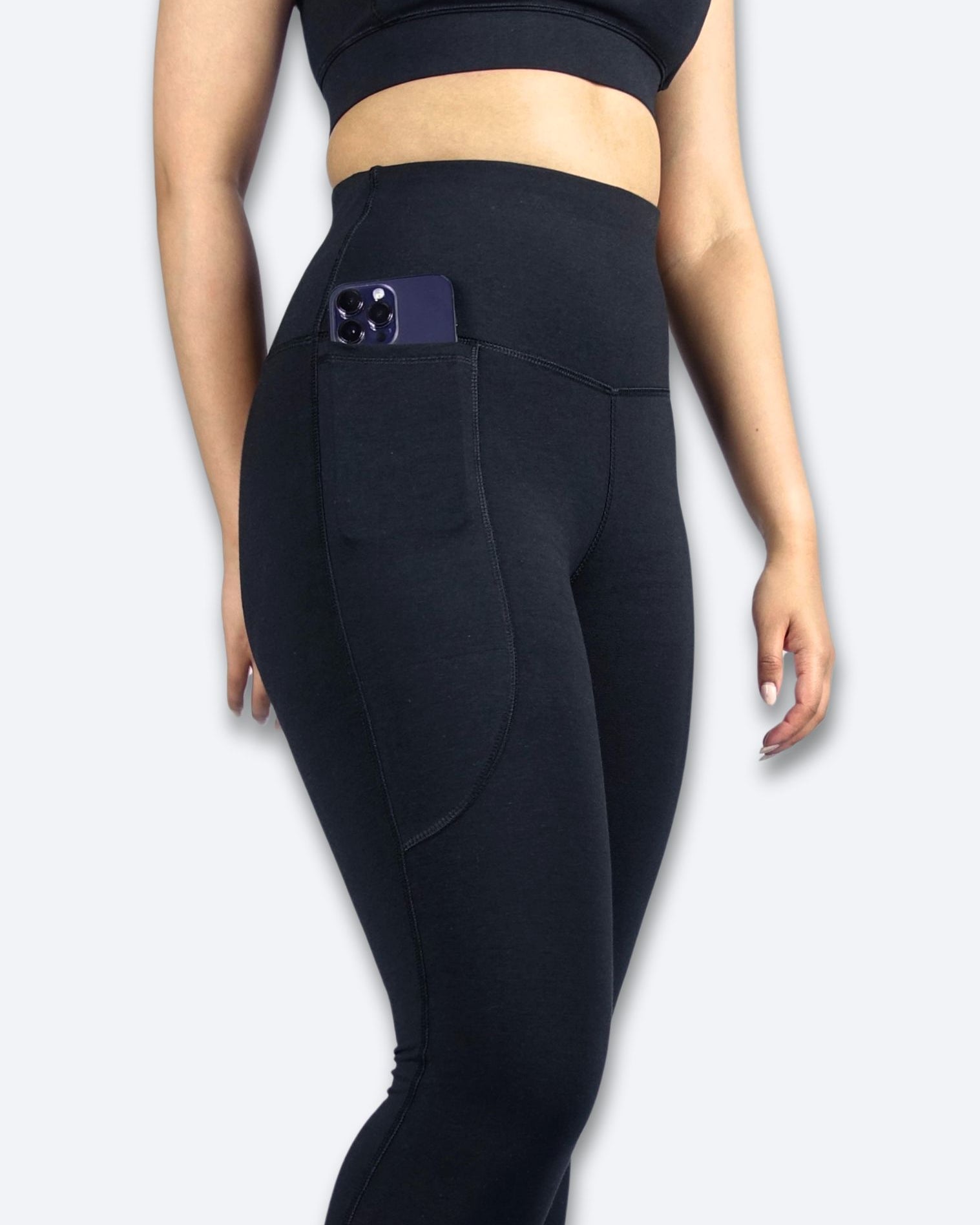
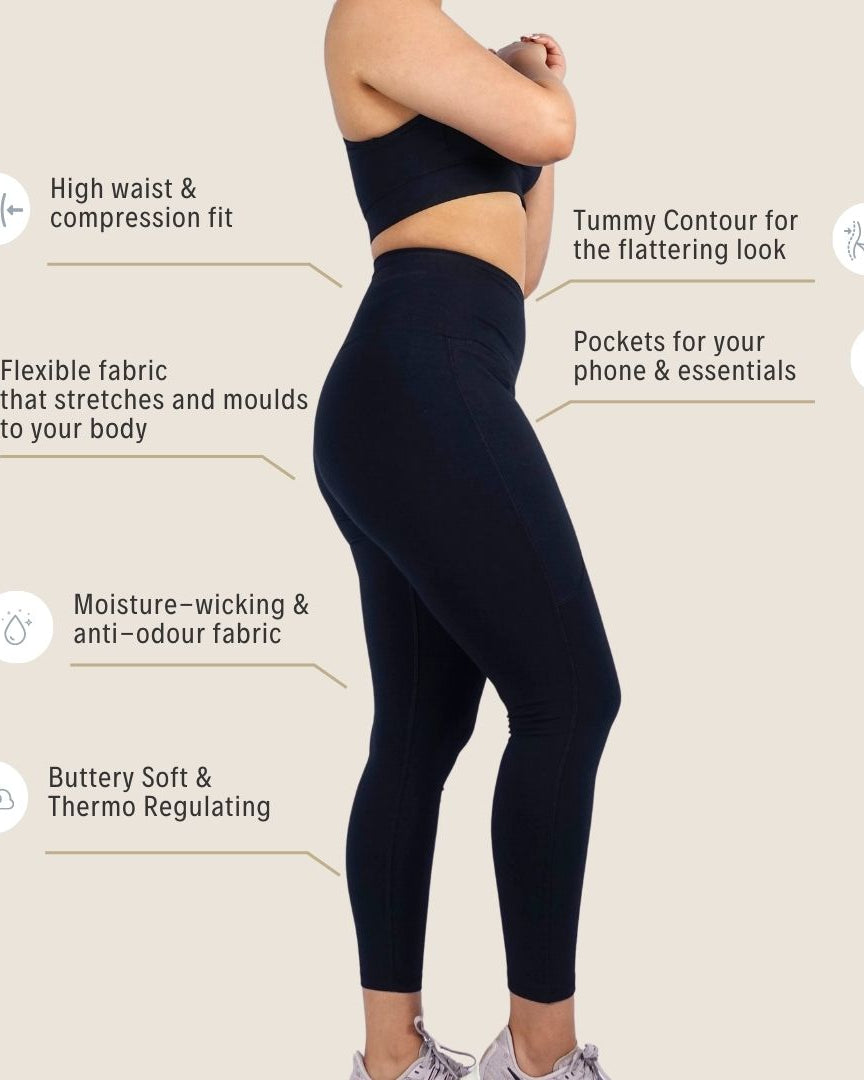
Yes, but only if the placement is right. A pocket sewn too close to the waistband bounces with every step. One that's too shallow lets your phone slide out the second you sit down. What works is a deep pocket on the outer thigh, angled slightly, with enough fabric tension around the opening to hold your phone through a run or a fast walk without you thinking about it once. It's a small detail, but it's the difference between wearing leggings on a walk with your keys and phone versus needing a bag for the same trip. (Worth checking the product page either way, our newer styles carry this side phone pocket, while some of our older crop and full-length pieces have a simpler key-and-card pocket instead.)
Cotton, synthetic, or bamboo. Which fabric wins?
I'll be honest here, because all three fabrics have their place and pretending otherwise wouldn't help you.
|
Synthetic (nylon/elastane) ✓Great for high intensity training ✓Dries fast (depending on the fabric), holds compression well ✓Usually cheaper to produce ×Traps heat and odour over a long day (attractive to smelly bacteria ) |
Bamboo-cotton blend ✓Naturally moisture wicking and breathable (anti odour) ✓Naturally antibacterial, stays fresher for longer ✓Genuinely soft on sensitive skin ×Won't beat a technical synthetic in a sprint set |
Cotton leggings for women sit somewhere in between. Cotton on its own is the softest and most breathable of the three against skin, but it doesn't have great stretch recovery, so pure cotton leggings tend to bag out at the knees and lose their shape. Blending bamboo, cotton, and a bit of spandex together is our attempt to get the stretch recovery of a technical fabric with the skin feel of a natural one, which is exactly what women with sensitive skin tend to notice first when they switch over from a purely synthetic pair.
There's an environmental side to this too, though I'd rather just tell you the facts than lecture you about it. Bamboo grows fast without much water or pesticide, and our fabric is Oeko-Tex certified across the range, with GOTS and Fairtrade certification on top for most of our ranges. If you want to go deeper on how bamboo compares to synthetic fabric, we have covered it properly in this piece on bamboo activewear.
What does "squat proof" really mean?
It means the fabric stays opaque under stretch, not see through when the fibres pull apart at their widest point, which is exactly what happens at the bottom of a squat. It comes down to two things, fabric weight (heavier GSM has more fibre density to stretch before skin shows through) and knit construction (a tighter knit hides more than a loose one, even at the same weight). Fit plays into this too. A pair sized too small stretches further than it's built for, which spreads the fibres wider and thins the fabric right when you need it most, so sizing up rather than down is usually the safer call if you're between sizes. And because this is about contrast more than anything else, any thinning tends to show up more visibly against lighter skin tones, the same way a dark colour hides it better than a pale one. Here's a test that works better than any label. Hold the fabric taut against a bright light or a phone torch. If you can see skin tone or shadow through it at full stretch, it's not squat proof, no matter what the tag says. We've written a full breakdown of how we test for this ourselves, and exactly which of our own styles pass, in this guide to squat-proof leggings if that's specifically what you're shopping for.
How do you know if leggings fit?
Fit is about movement, not how you look standing still in the mirror. Squat down. The waistband shouldn't dig in or fold over. Sit cross legged. The fabric shouldn't pull tight across your knee. Lift a leg to hip height. You shouldn't feel restricted at the hip seam. Then check the length once you've actually moved around in them, because leggings that sat perfectly standing still often ride up an inch or two once you've been walking or stretching. If you're stuck between two sizes, sizing up is almost always the safer call. Compression fabric is far more forgiving on the larger size than the smaller one. Our size guide is worth a look if you're not sure.
Are cheap leggings worth it?
A $25 pair that loses its shape after fifteen washes and gets binned in three months ends up costing you more per wear than a $100 pair that's still holding its compression two years later. It's the same maths as a good coat or a decent pair of shoes. If you're realistically wearing leggings two or three times a week, the fabric quality and construction (waistband recovery, seam durability, whether the colour fades) end up mattering a lot more than the price tag alone. Worth checking a few reviews for phrases like "still looks new after months" rather than just chasing the cheapest option.
Can you wear leggings outside the gym?
More and more, that's the whole point. The leggings that do the most work in most women's wardrobes aren't saved for one 45 minute class. They're comfortable enough for all day wear, worn to yoga, then the school pickup, then the coffee run, then gardening on Saturday, washed and worn again the next week without losing their shape. We're seeing more and more of them worn to work too, thrown on under a longline blazer or a coat for a day that starts at a desk and ends at a class, not just the studio-to-street rotation. If you're buying leggings to live in rather than just to train in, prioritise a fabric that feels good on skin for hours, not just for the workout itself. That's really the whole case for a bamboo-cotton blend over a purely technical synthetic.

"I am a repeat customer. I love these leggings and have a few pairs. Although purchased for yoga I wear them on walks and just generally around the home or when I'm gardening. They wash and last extremely well also."
Everything above is built into ours. Heavier bamboo-cotton fabric, naturally anti-odour, four way stretch with compression, a waistband that stays up, and a phone pocket that works designed in Brisbane, in sizes XS to 3XL.
Shop LeggingsCommon Questions Answered
What are the best leggings for Pilates and yoga?
Look for a fabric weight of 280 GSM or more so it holds opacity through deep stretches, a flat gusset so nothing digs in during a wide-legged pose, and an Ankle length if you want to show a bit of ankle in reformer Pilates without fabric bunching around your shoe (on taller frames this length tends to sit closer to a 7/8 cut).
Are bamboo leggings good for sensitive skin?
Generally, yes. Bamboo fabric is naturally soft, breathable, and has natural antibacterial properties, which is exactly why a lot of women with sensitive skin switch to it after finding synthetic activewear irritating.
What's the difference between high waist and cross waist leggings?
A high waist band is one flat panel that sits above the belly button. A cross waist design uses two panels that cross and cinch at the front, which adds a sculpting effect. Both bands acts as an extra anchors so it stays put during movement.
How long should quality leggings last?
Well made leggings with a proper spandex blend and a decent waistband should hold their shape and compression for at least a year or two of regular wear and washing.
Are compression leggings the same as squat proof leggings?
Not quite. Compression is about how tightly the fabric holds and supports muscle. Squat proof is specifically about opacity under stretch. A legging can be very compressive and still go sheer if the GSM is too low, since the two come from different parts of the fabric spec.
Will Ankle length leggings actually reach my ankle if I'm tall?
Not always. Ankle length is fitted to sit right at the anklebone on an average height, so on a taller frame it will typically sit a little higher, more like a 7/8 cut. It's not a fault in the fit, just something worth knowing before you order if you're after full ankle coverage specifically.
What sizes do Active by GS leggings come in?
Our leggings run from XS to 3XL across styles, in crop, ankle, and full length.
The softer side of active.